
The Final Receipt: Solar vs. Utility
We do the final math. Compare 25 years of utility bills vs the cost of a solar system. See how going solar affects your retirement savings.
Solar payback in your region — free estimate, instant calculator.
Open calculator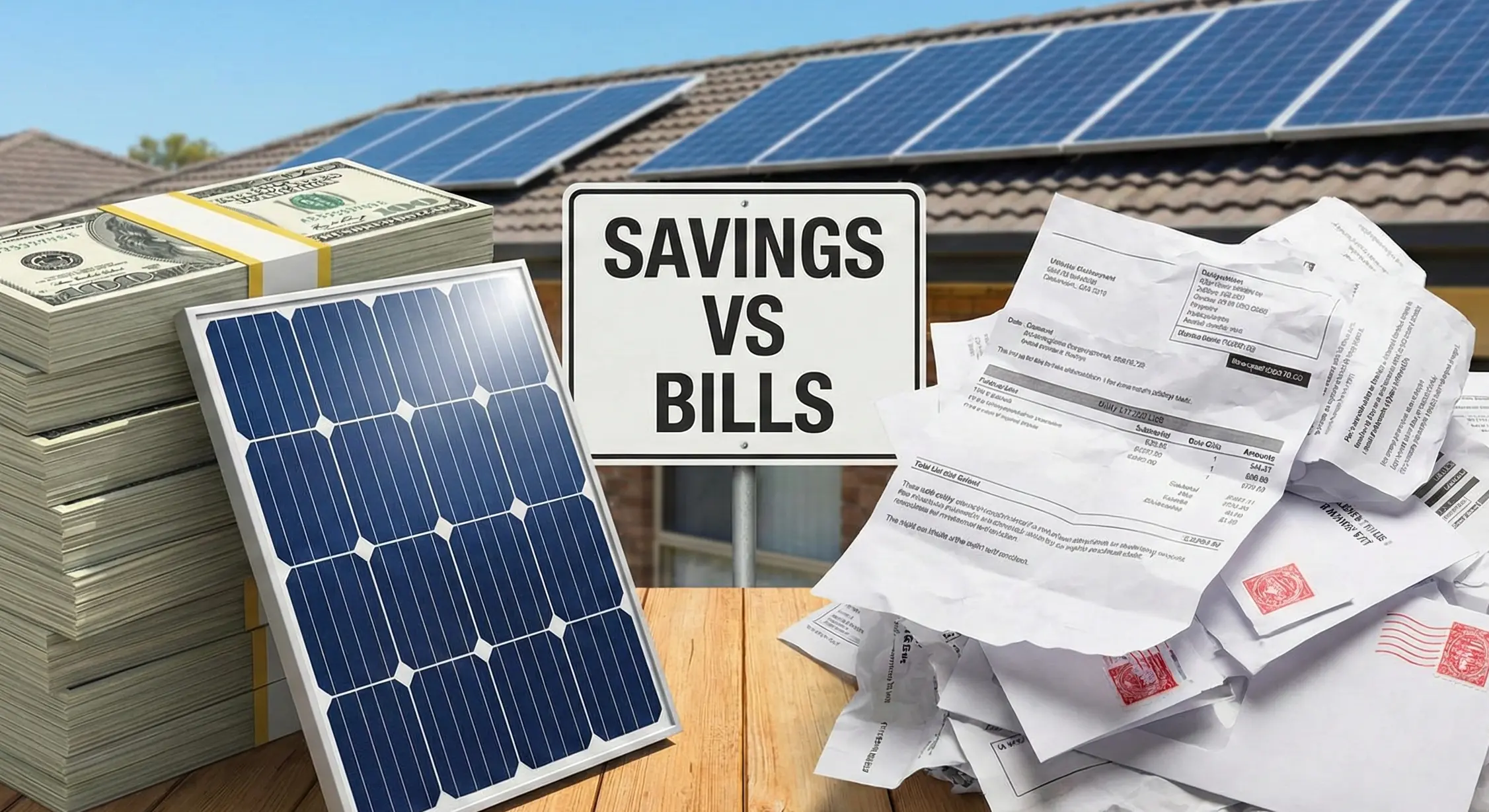
Let’s zoom out. Imagine it is the year 2050. You are retiring. You are cleaning out your desk drawer.
You find two piles of paper.
Pile A: The Renter's Path You didn't go solar. You paid the utility bill every month. * You started paying $200/month in 2025. * Inflation averaged 4%, so by 2035 you were paying $300. * By 2045, you were paying $450. * Total Spent: Over $110,000. * Asset Value: $0. You have a stack of receipts for electricity you already used.
Pile B: The Owner's Path You bought a solar system in 2025 for $25,000 (after tax credit). * You paid off the loan in 8 years. * For the next 17 years, you paid almost nothing (just the $15 connection fee). * Total Spent: Approx $35,000. * Asset Value: You still own the system. Even at 25 years old, it produces free power, adding value to the home.
The $75,000 Difference The difference isn't just savings. It's wealth.
If you took that $200/month you didn't pay to the utility and put it into an S&P 500 index fund for 25 years, you wouldn't just have $75,000. You would have over $150,000 thanks to compound interest.
Solar isn't a utility bill. It is a retirement account strapped to your roof.
Pro Tip From the Field "Stop asking 'What is the payback period?'
Do you ask what the payback period is on your kitchen counter? Or your sofa? No. You buy them because you need them.
But solar actually pays you back. It is the only thing you will ever buy for your house that writes you a check. The internal rate of return (IRR) on a cash solar purchase beats the stock market, beats bonds, and beats real estate rental income—and it is tax-free. Stop overthinking it. The sun rises every day. The utility rates rise every year. Bet on the sun."
FAQ: The Long Haul
- Q: Will the panels really last 25 years?
- A: Yes. Solar panels have no moving parts. They are solid-state rocks. The oldest modern panels from the 1980s are still working today.
- Q: What maintenance costs should I budget?
- A: Budget for one inverter replacement around Year 12-15. That will cost about $2,000 - $3,000. The panels themselves usually need zero money spent on them.
- Q: What if technology gets way better in 10 years?
- A: Who cares? Your system is already paid off and producing free power. If a 'Super Panel' comes out in 2035, you can buy it then. But you will have saved $25,000 in the meantime."