
Why Solar is Better in Florida than Seattle
Solar advice isn't one-size-fits-all. Learn how Irradiance and Peak Sun Hours make solar a goldmine in the South and tricky in the North.
Solar payback in your region — free estimate, instant calculator.
Open calculator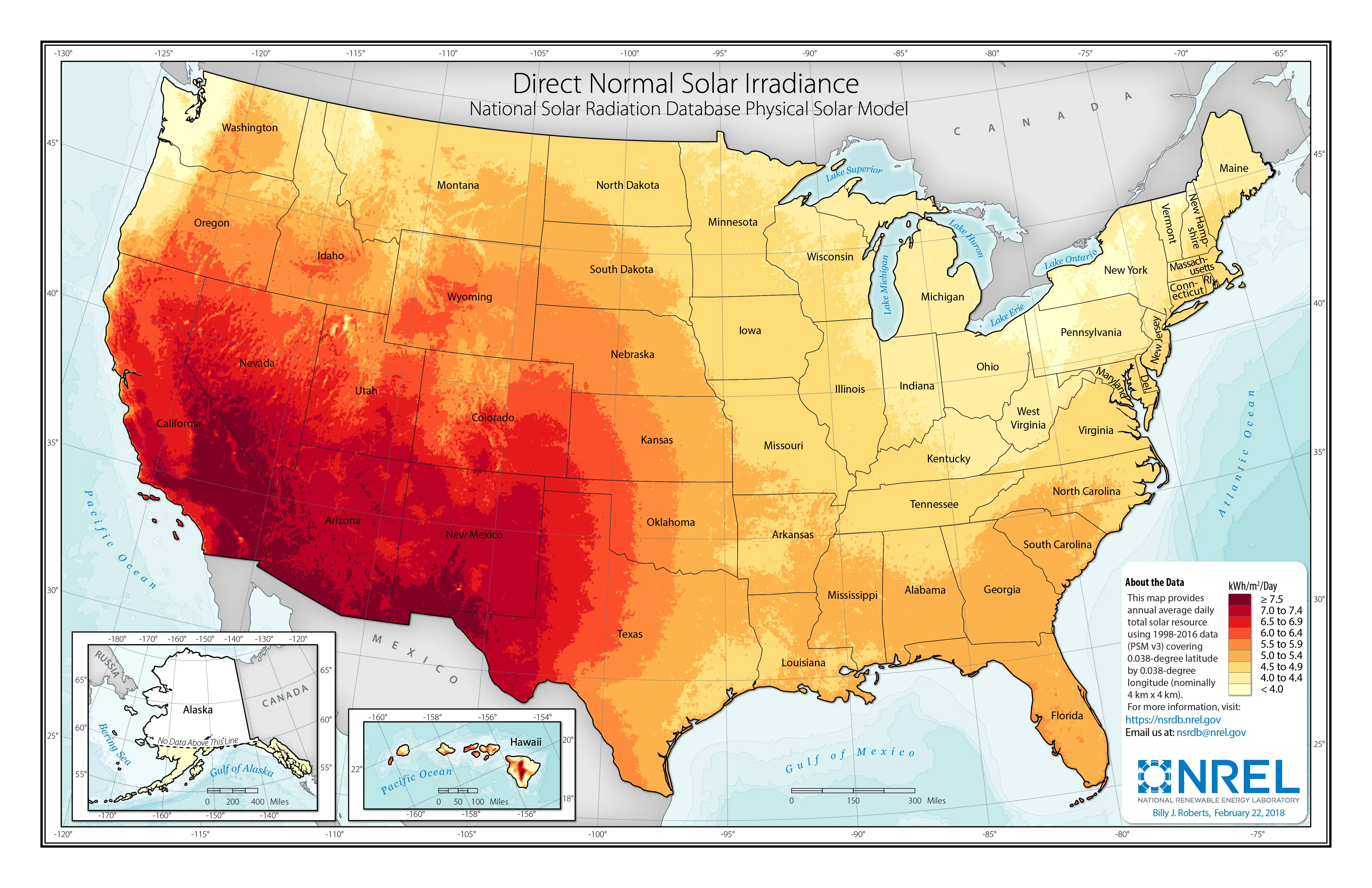
You read a generic article in the New York Times that says "Solar isn't worth the investment." You nod and decide not to buy.
The problem? You live in Tampa. The writer lives in Manhattan or Seattle.
Solar is not a one-size-fits-all appliance like a refrigerator. It is a power plant that runs on fuel. That fuel is Irradiance—the actual solar energy hitting the earth.
The Geography of Savings In the Pacific Northwest, you have heavy cloud cover and a lower sun angle. To make solar work in Seattle, you need a steep South-facing roof to catch every possible photon. A North-facing roof in Seattle is worthless.
In Florida, Arizona, or Texas, the "fuel" is so potent that you can break all the rules. The sun is higher in the sky. The days are longer. I can put panels on a flat roof, an East roof, or even a shallow North roof in Miami, and they will still out-produce a perfect South roof in Boston.
The "Peak Sun Hour" Math It comes down to one number: Peak Sun Hours (PSH) per day. * Seattle: ~3.5 PSH. * Phoenix: ~6.5 PSH.
That means a 10-panel system in Phoenix produces nearly double the electricity of the same system in Seattle, for the exact same installation cost. The ROI in the Sun Belt isn't just better; it's a completely different financial product.
Pro Tip From the Field "I use a tool called a Solar Pathfinder. It’s a little plastic dome that reflects the skyline. It shows me exactly where the trees and chimney will cast shadows every month of the year.
Here is the trick for cloudy areas: Diffuse Light. Standard panels struggle in gray weather. If you are in a cloudy zone (or have trees), you must use high-sensitivity panels (like Maxeon or REC Alpha) and Microinverters (Enphase). They wake up earlier in the morning and harvest more energy from scattered, cloudy light than cheap string inverters. In Florida? You can get away with cheaper gear because the sun is a sledgehammer."
FAQ: Location Matters
- Q: Does heat help solar panels?
- A: No! Heat actually hurts efficiency. Solar loves light, hates heat. A crisp, sunny winter day is actually the best production day. That's why the 'Temperature Coefficient' on the panel spec sheet matters so much in Arizona.
- Q: Do I need to clean panels more often in dry states?
- A: Yes. In Florida, the rain cleans them daily. In California or Nevada, dust build-up can kill 15% of your power. You need to hose them down twice a year.
- Q: Is my roof angle important?
- A: Less than you think. The difference between a 'perfect' 30-degree tilt and a 15-degree tilt is usually only about 3-5% in annual production. Don't spend thousands tilting panels just to gain $50 of power."