
Recycling: Where Do Dead Panels Go?
What happens to solar panels at the end of their life? They aren't trash. Learn about the booming solar recycling industry and second-life markets.
Solar payback in your region — free estimate, instant calculator.
Open calculator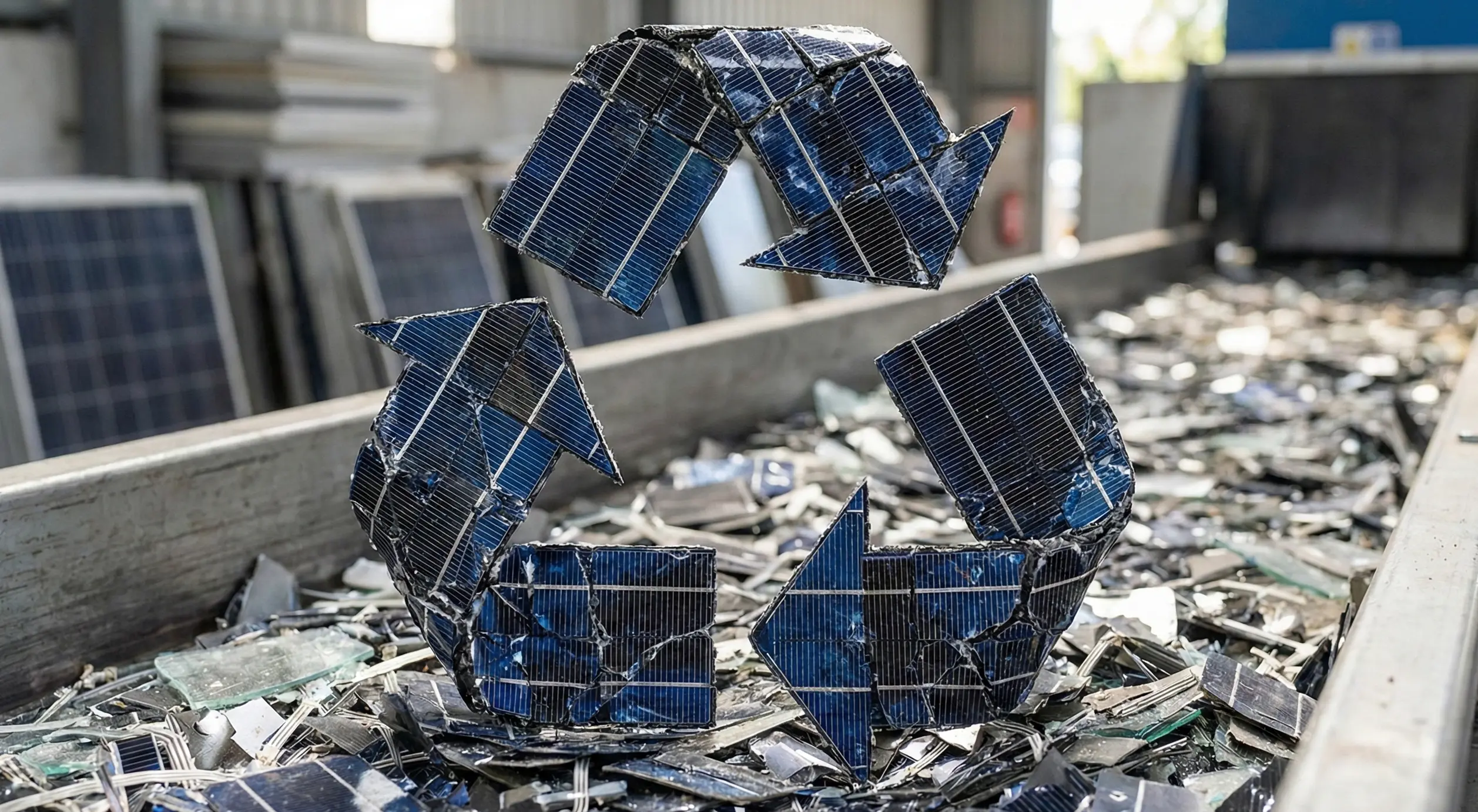
You see the headlines on Facebook: "Solar panels are creating a mountain of toxic waste!"
Critics scream that we are building a future environmental disaster. They imagine landfills overflowing with cadmium and lead sludge.
The Trash Myth Let's look at what a solar panel actually is. It isn't a battery. It isn't a nuclear reactor.
It is an aluminum frame holding a sheet of glass. Sandwiched inside is a thin layer of silicon and silver wire. * 80% Glass (Recyclable) * 10% Aluminum (Highly Recyclable) * 5% Polymer Backsheet (Trash) * 1% Copper/Silver/Silicon (Valuable)
Comparing a dead solar panel to a barrel of oil sludge is laughable. It is basically a fancy window.
The Second Life Market Here is the reality of "dead" panels: They almost never go to the dump. Why? Because a 25-year-old panel usually still produces 80% of its original power.
There is a massive booming market for used panels. Farmers buy them to power electric fences. People buy them for hunting cabins or RVs. Developing nations buy them to build microgrids in villages that have never had power.
I just looked on Craigslist. Guys are selling used 250W panels for $50 a pop. That isn't trash; that is an asset.
The Recycling Boom For the truly broken ones (shattered glass), specialized recycling plants are popping up everywhere (like SolarCycle in Texas). They crush the panel, separate the glass for construction fill, melt the aluminum, and use chemical baths to recover the silver. The silver inside a panel is worth real money. As volume goes up, recycling becomes profitable, not a burden.
Pro Tip From the Field "I had a client panic because he cracked a panel with a baseball. He thought it was hazardous waste. I told him, 'Buddy, put it on Facebook Marketplace for $20.' It was gone in an hour.
A guy picked it up to charge the battery on his boat. The panel still worked fine, it just looked ugly. We aren't burying these things in the desert. We are reusing them. The 'Toxic Waste' narrative is mostly fear-mongering from industries that don't want you making your own power."
FAQ: End of Life
- Q: Are panels toxic?
- A: Most residential panels are Silicon-based. They are safe. The only panels with 'Cadmium' (toxic) are thin-film panels (First Solar) used on massive utility solar farms, and those companies have strict mandatory recycling programs.
- Q: How long do panels last?
- A: The warranty says 25 years. The physics says 40+ years. They don't stop working; they just fade slowly.
- Q: Can I take them to the dump?
- A: Check your local laws. Some landfills charge a fee for 'E-Waste.' But again, selling them or donating them is free and smarter."