
Does Solar Increase Property Taxes?
Worried about tax hikes? In most states, solar increases home value but is exempt from property taxes. Check your state rules here.
Solar payback in your region — free estimate, instant calculator.
Open calculator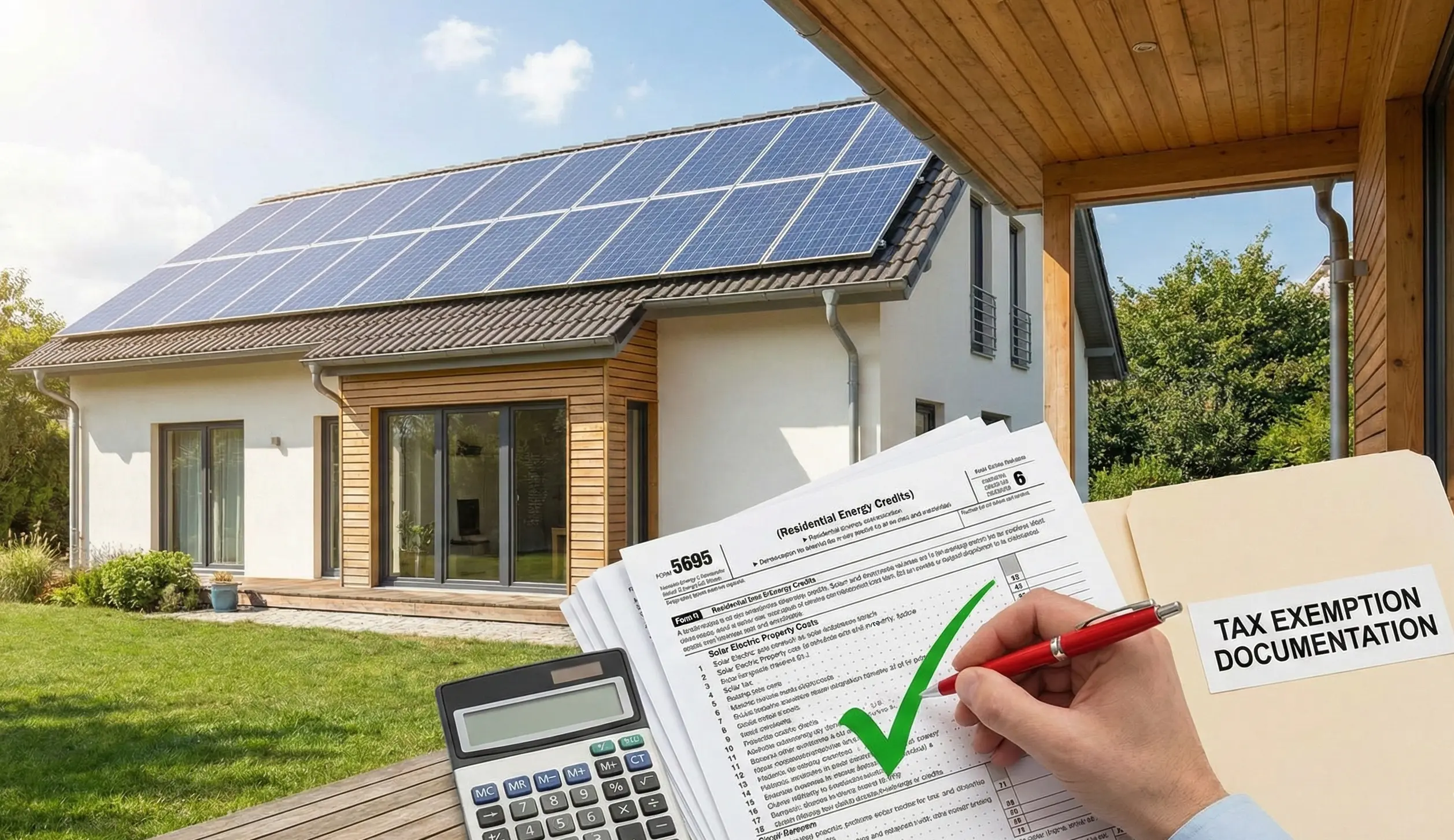
You are about to bolt a $30,000 power plant to your roof. Logic dictates that if you build a $30,000 swimming pool or a new garage, the Tax Assessor comes knocking to raise your property taxes.
Homeowners often hesitate at the finish line, terrified that saving $200 on electricity will cost them $150 in new taxes.
The Good News: The Exemption Fortunately, logic doesn't apply here. In over 35 states—including major solar markets like Texas, Florida, California, and Arizona—renewable energy systems are 100% exempt from property tax value assessments.
This means the market value of your home goes up (studies show buyers pay a premium for owned solar), but your assessed taxable value remains flat. You get the equity without the penalty.
The Paperwork Trap However, the exemption is not always automatic. This is where people get burned. In some jurisdictions, the assessor assumes any permit filed for an electrical upgrade is a taxable improvement unless told otherwise.
For example, in Texas, homeowners must file Form 50-123 (Exemption Application for Solar or Wind-Powered Energy Devices) with their county appraisal district. If this single sheet of paper isn't filed by April 30th, the county computer might automatically hike the tax bill.
Value vs. Liability It is crucial to distinguish between "Owned" solar and "Leased" solar. The tax exemption applies to the system value. * Owned System: Adds value to the home, but is tax-exempt. * Leased System: The tax assessor usually considers this personal property of the leasing company, not real estate. It adds $0 to the home's taxable value, but it also adds $0 to the resale value (and often hinders the sale).
FAQ: Tax Implications
- Q: Does the exemption last forever?
- A: It depends on the state. In many places, the exemption is valid for the life of the system. In others, it might be a 10 or 20-year window. Check state statutes.
- Q: Does this apply to batteries too?
- A: Usually, yes. Energy storage integrated with solar is typically defined as part of the renewable energy system under the tax code.
- Q: What if I sell the house?
- A: The exemption typically stays with the property. The new owner enjoys the lower tax assessment despite buying a more valuable home.