
The $0 Bill Neighbor: He isn't Crazy
Think solar is expensive? In sunny states, staying on the grid costs more. See the math behind the $0 electric bill.
Solar payback in your region — free estimate, instant calculator.
Open calculator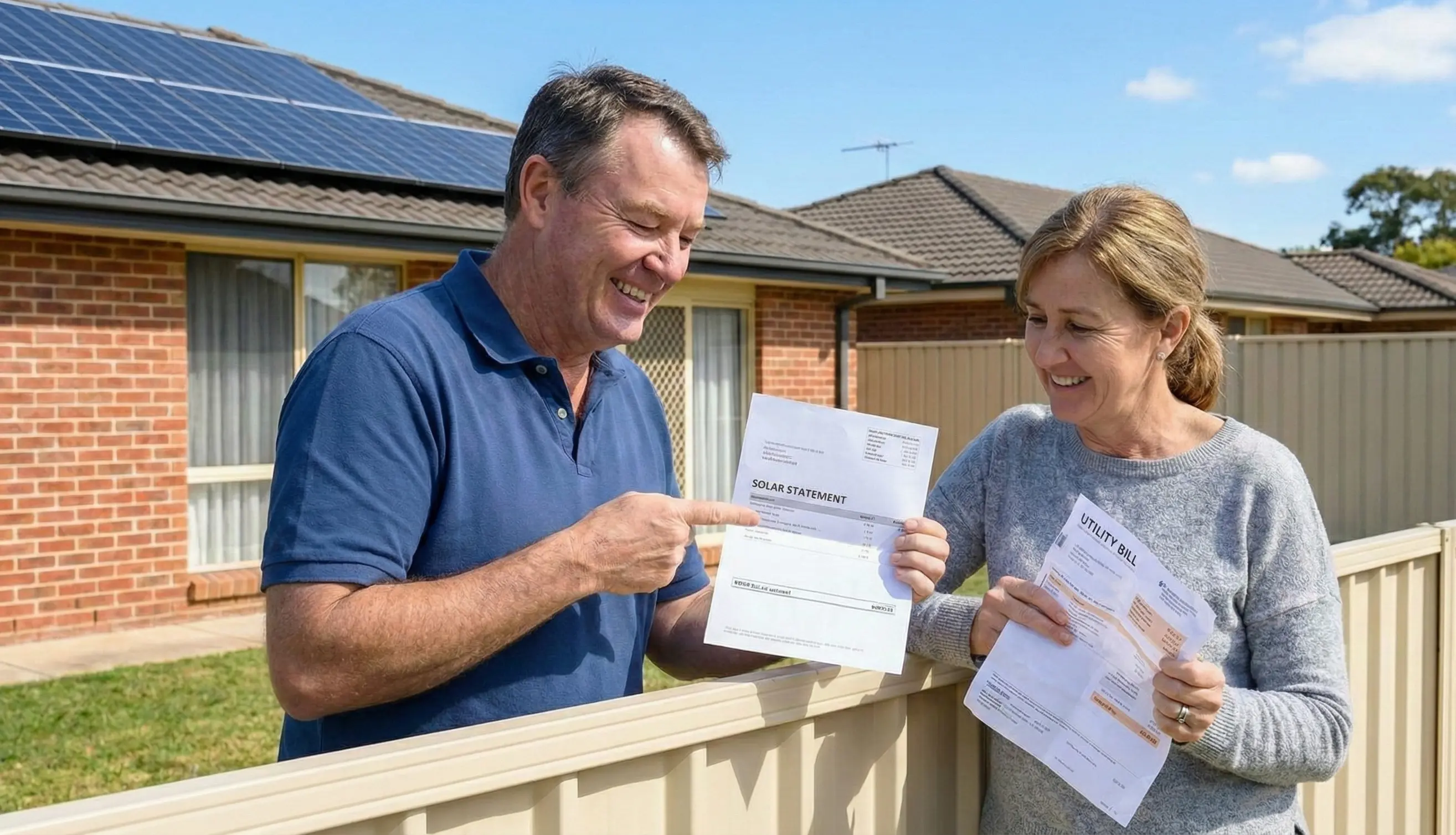
You look out your kitchen window and see Dave next door. He’s got twenty shiny black rectangles bolted to his roof. You shake your head. You think, "Dave is such a green-peace eco-warrior. He probably spent fifty grand on that. I can't afford to save the planet right now."
You are looking at it all wrong. Dave doesn't care about polar bears. Dave cares about his wallet. While you are sitting there writing a check for $350 to the power company this month, Dave is writing a check for $15.
The Math of the $15 Bill Here is the secret nobody explains clearly: You can never fully fire the power company. Unless you cut the wires and live in a cabin with batteries, you still have to pay to be connected to the grid. It’s called the Minimum Connection Fee. In Florida (FPL) or the Carolinas (Duke), it’s usually between $10 and $25 a month.
That is what Dave pays. He pays the rent for the meter on the wall. But he pays $0 for the electrons that flow through it.
The Wealth Transfer Think about the difference. You pay $350. He pays $15. That is a $335 difference every single month. Over ten years, assuming rates don't even go up (spoiler: they will), that is $40,200 that stayed in Dave's bank account instead of going to the utility CEO's bonus package.
Dave took that "savings" and put it into his solar loan. Once that loan is paid off in 7 or 8 years, he is generating free energy. You? You are still renting. You will be renting until the day you die. Dave isn't crazy. He’s mathematically richer than you.
Stop Looking at the Price Tag You are scared of the $25,000 sticker price on the system. Stop it. You are already committed to paying the utility company $100,000 over the next 25 years. That debt is already signed. Solar just lets you refinance that debt at a lower, fixed rate.
FAQ: How It Actually Works
- Q: Is the bill literally zero?
- A: Rarely. It's usually the fixed connection fee (approx $15). However, some utilities allow you to overproduce and apply credits to cover that fee, resulting in a true $0 bill. Check your local "Net Metering" rules.
- Q: Does he have batteries?
- A: Probably not. To get a $0 bill, you don't need batteries. You just need to produce enough power during the day to offset what you use at night. The grid is his battery.
- Q: What happens if he sells the house?
- A: He lists it as "No Electric Bill." Homes with paid-off solar sell faster and for about 4% more money. It's a massive asset.