
The Sky Turns Green: Why Your Solar Died with the Grid
Shocked that your solar panels don't work in a blackout? Learn about 'Anti-Islanding' and why you need a battery to keep the lights on.
Solar payback in your region — free estimate, instant calculator.
Open calculator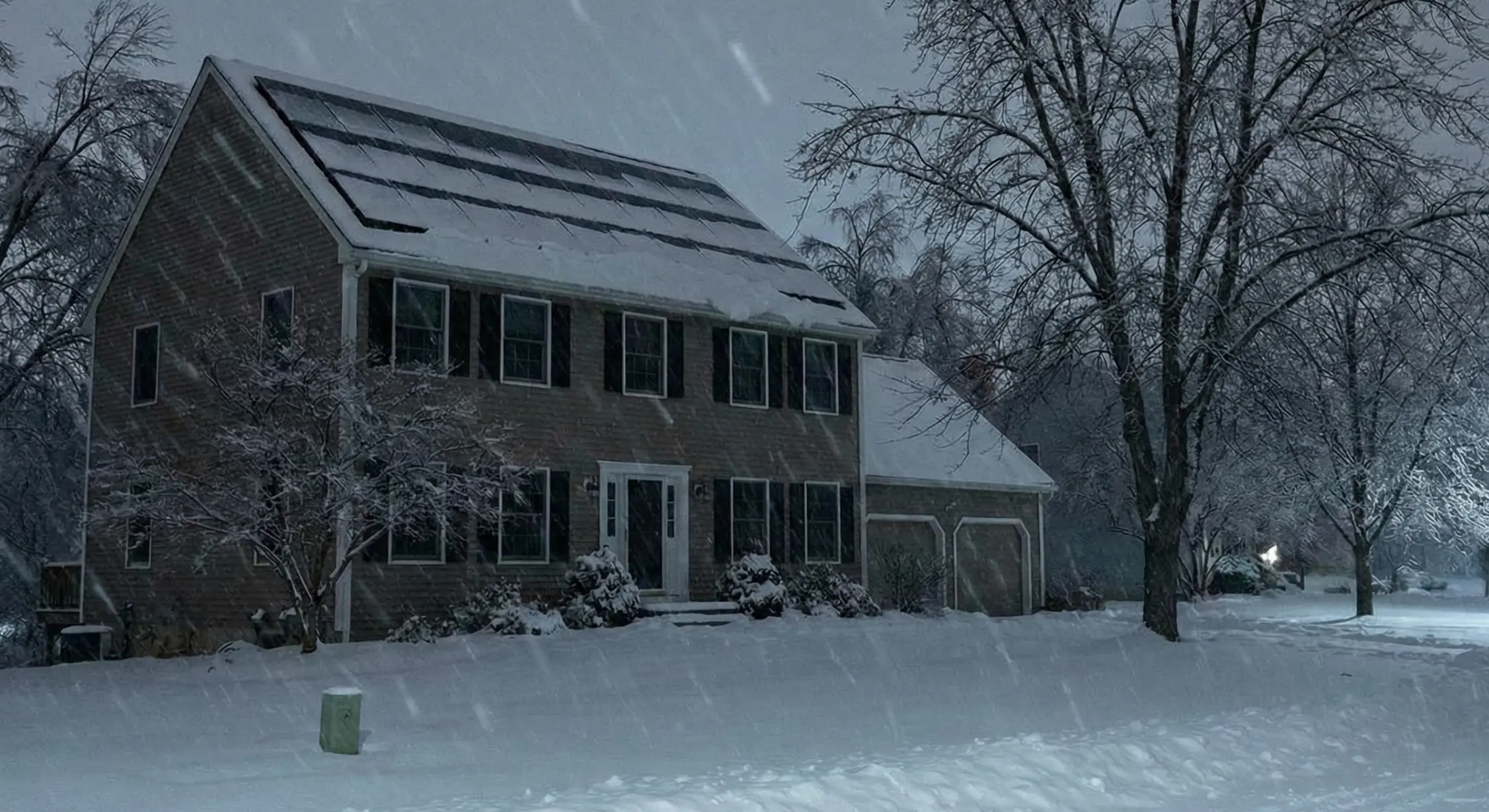
February 2021. The Great Texas Freeze. The power grid collapses. Millions are in the dark.
You look out the window. The sun is shining on the snow. You have 30 solar panels on your roof. You flip the light switch.
Nothing.
You check your solar app. "System Error: Grid Frequency."
You are furious. You have a power plant on your roof, and you are freezing just like your neighbors.
The Why: Anti-Islanding This is not a malfunction. It is a safety feature mandated by the NEC (National Electrical Code). It’s called Anti-Islanding.
When the grid goes down, your inverter must shut off within milliseconds. Why? Because if your panels kept pumping 240 volts of electricity back into the wires, you could electrocute the lineman who is climbing the pole down the street to fix the transformer.
Unless you have a battery to physically disconnect (island) your house from the grid, your solar is legally required to be a paperweight during an outage.
The Fix To have power when the grid fails, you need hardware that can create a "Microgrid." 1. A Battery: (Tesla Powerwall, FranklinWH). This is the standard fix. The transfer switch clicks, the battery takes over, and the solar keeps running to recharge the battery. 2. Sunlight Backup: The Enphase IQ8 microinverter is a game changer. It can form a microgrid without a battery. It won't run your AC or stove, but it can keep the fridge and lights on while the sun is shining. As soon as a cloud passes, the power might flicker, but it's better than zero.
Pro Tip From the Field "If you can't afford a full battery backup ($15k+), look into the Enphase IQ System Controller. It acts as the brain. You can start with just the controller and a tiny battery (like the Enphase 5P) just to keep the internet and lights on. You don't need to back up the whole house. Back up the 'Critical Loads.'
I tell clients: 'Solar saves you money. Batteries save your bacon.' They are two different products for two different goals."
FAQ: Outage Reality
- Q: Can I add a battery later?
- A: Yes. Most modern batteries are 'AC Coupled,' meaning they can be retrofitted to any existing solar system.
- Q: How long will a battery last?
- A: A typical 13.5 kWh battery will run a standard home (without AC) for 12 to 24 hours. With solar recharging it during the day, you can theoretically run indefinitely if you are careful with usage."