
Cash vs. Loan: The Dealer Fee Trap
That 2.99% solar loan isn't real. Learn how 'Dealer Fees' add thousands to your project cost and why cash might be king.
Solar payback in your region — free estimate, instant calculator.
Open calculator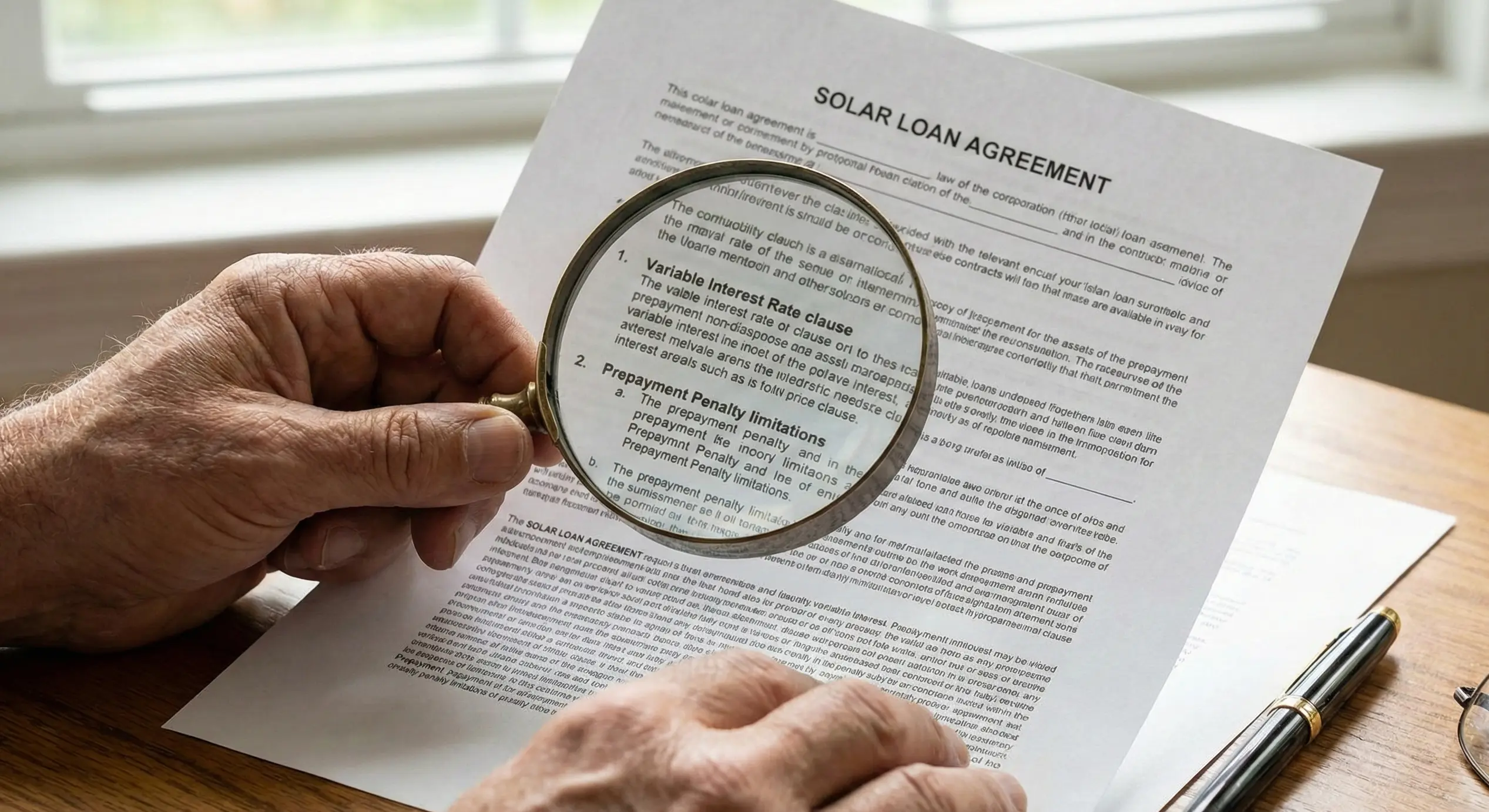
You decide to go solar. The salesman sits at your table and slides a piece of paper across. "Good news," he says. "We got you approved for a 2.99% interest rate. Your payment is lower than your electric bill."
It looks like a no-brainer. In an economy where mortgage rates are hovering around 7%, a 2.99% loan seems like a gift from the finance gods.
It isn't. It is a trap called the Dealer Fee.
Buying Down the Rate Banks do not lend money at 2.99% out of the kindness of their hearts. To offer that below-market rate, the lender charges the solar installer a massive upfront fee—often 25% to 35% of the total loan amount.
The installer doesn't pay this. You do. They take the "Cash Price" of the system (say, $30,000) and inflate it to cover the fee. Suddenly, the loan amount is $42,000.
You are paying $12,000 in prepaid interest just to see a pretty "2.99%" on the paperwork. You aren't getting a low rate; you are buying a more expensive system.
The Cash Price Test This is why the "Cash Price" is often drastically lower than the "Finance Price." Unscrupulous sales reps focus entirely on the monthly payment to hide the bloated principal. If you try to pay off that loan early in year 3, you get burned. You still owe the full $42,000, even though the system was only worth $30,000. You are underwater on your roof from day one.
The Smarter Move Always demand to see the Cash Price first. Compare it to the financing offer. If there is a $10,000 difference, walk away from that specific loan.
Instead, look at a HELOC (Home Equity Line of Credit) or a standard loan from a local Credit Union. The rate might be higher (say, 7-8%), but the principal balance will be thousands of dollars lower. You pay interest on the actual cost of the equipment, not on a hidden bank fee. Plus, with a HELOC, you can pay it off early without penalty.
FAQ: Financing Secrets
- Q: Is the dealer fee listed on the contract?
- A: Rarely as a line item. It is usually baked into the total system cost. You only find it by asking: "What is the cash price if I write you a check today?"
- Q: Is solar loan interest tax-deductible?
- A: Generally, no. Most solar loans are unsecured personal loans. However, interest on a HELOC used for home improvement is often deductible. Consult a CPA.
- Q: What is a "Same-As-Cash" loan?
- A: These are short-term bridge loans (12-18 months) with 0% interest, designed to float you until your tax credit refund arrives. If you miss the payoff deadline, interest often back-dates to day one.